Monday, December 20, 2010

The Forgotten Constant


I think it's a shame that the humanities leaves out human interaction and relationship with nature. We become who we are and develop as we do as a consequence of our natural environment. Human development and progress are inextricably linked, I think. But maybe that's the problem. Maybe our dependencies, reliance and interactions with nature are so permeable, so overarching, that they are forgotten -rather, not taken as a given, but regarded as a constant to be ignored... which may not be so constant.
And now, a lamentation of sorts in the words of Thoreau:
Here is this vast, savage, howling mother of ours,
Nature, lying all around, with such beauty, and such affection for her children,
as the leopard; and yet we are so early weaned
from her breast to society, to that culture which is exclusively
an interaction of man to man.

Tuesday, November 16, 2010

Bound Infinitesimals

I like the idea of multiple infinities. The notion of a bound infinitesimal, an infinite space between, a finite area in which there exists no biggest, no smallest -well, it seems to reflect real life. Scientists can travel deeper and deeper into the small -the cell, the organelle, the molecule, the atom, the subatomic particle, the bodies of quantum mechanics- and yet never be satisfied that they've reached the smallest (and if they do declare that they've discovered the smallest there is, they are inevitably proved to be wrong by consequent discovery). The same holds true when we see how big we can go. We'll call it the universe, the term for "everything." And then red shift suggests that that "everything" is expanding... into something bigger.


Yes, I like the idea of infinities. It reflects the multiple unknowns that exist, rather ubiquitously.

Wednesday, November 10, 2010

Essentialism

Dutch forger, Han van Meergan, hated modern art. He started his (legitimate) career painting in the Rembrandt style. He wasn't bad, but he wasn't good either. Decisively mediocre, you might say. Thus, he was relatively unsuccessful and had little luck with critics. One critic once said of him that he had "every virtue except originality."

So partially as an act of revenge -and partially to get rich- Van Meergan started to (illegitimately) paint reproductions of Vermeers. And you know what? The critics raved! His reproduction of The Supper at Emmaus was perhaps the most famous painting in Holland and one leading critic of Dutch baroque art swooned: "We have here a -I am inclined to say the- masterpiece of Jan Vermeer of Delft." But that was just it. The painting was adored for being a Vermeer.

Van Meegeren, being quite the egomaniac, would visit his painting int he Boijmans Gallery and loudly tell other visitors to the museum that it was a fake, just to hear them tell him that such a thing was nonsense, that only a genius like Vermeer could paint so well. And so Van Meergan, despite his narcissism may not ever have gotten caught... were it not for the Nazis. He was arrested and charge with treason for selling a Vermeer to the Nazi Hermann Goering -only it wasn't a real Vermeer, of course. He confessed that it wasn't a real Vermeer that he had sold... and then confessed that the others weren't real either.

And so the critics were embarrassed, to say the least, but even more notable was the dramatic turnaround in the critiques of his paintings. Those who once may have rhapsodized about the beauty of these paintings, believing them to be Vermeer's, failed to see such beauty once the works were revealed to be forgeries. As one expert wrote, "After Van Meergeren's exposure, it became apparent that his forgeries were grotesquely ugly and unpleasant paintings, altogether dissimilar to Vermeer's." they looked no different, but were now ugly.

This phenomena occurs all the time, and not just with art or celebrity memorabilia. Humans are notorious for regarding objects as not only the compilation of their physical properties, the sensational stimulus they illicit, but also attribute to the object an essence, regarding the object as an individual, assigning it an identity on the cognitive level. Because of this, objects -or people- that may be in all other ways identical, and equivalent, are just not the same. I find myself recalling a certain four year old I babysitted who, though given an identical blanket when hers was thrown out, said "but I want my blankie back! This isn't my blankie!" This is also the reason most people wouldn't willingly wear a sweater previously worn by Adolf Hitler and I doubt that someone who looks like acts like and is in all ways just like your mother (a clone, if you will), would be accepted as an equivalent replacement for your mother.

Sunday, October 10, 2010

Fragility and the Development of Humanity


One of the key contributors to the development of the theory of plate tectonics in the 1950s should have a good grasp on the concept of fragility. In working for years on the idea that these so solid and seemingly unbreakable plates of crust on which we live are, in fact, a series of brittle puzzle pieces floating on top of a plastic aesthenophere and constantly in peril of crashing a breaking and whatnot, he also developed a philosophy on the importance of fragility in the natural world at all levels. He's argued that, similar to the way a brittle crust is a requirement for life on Earth as we know it to be, so too is fragility in all aspects of nature a benefit, rather than a detriment. It's fragility, he argues, that instigates change and growth and is, in fact, essential to development.


He applies this at the geologic level, but also points out that it occurs at the biological level, perhaps most poignantly. Though one might believe that the weaker, smaller, oldest, youngest, or otherwise impaired individuals of a pack might be left behind, cast away as the weakest link, reality shows the opposite. Social animals -and even those that we don't immediately regard as social- put the most fragile of their family at the center of their community. The weak and small get special protection, special attention. This can be seen in elephants, lemurs, wolves, lions, gorillas and monkeys. Paleontological findings even show that groups of early Neanderthals took special care of those that were born deformed or had been injured, and that this nomadic species even carried incapacitated individuals with them, rather than leave them behind.


Fragility, he claims, is the key to the development of reverence, of compassion. Humans often prize the breakable and care for the delicate, when there would, on the surface, appear to be no real advantage to doing so. It would seem that, to be Spartan about it, we would prize the durable and reliable and leave behind all who are unable to keep up. Instead, we arrange our societies around the preservation of those who cannot provide for themselves (children, the elderly, the sick) and value that which could so easily be destroyed.


Rather than being a weakness, such behavior could be seen as an evolutionary trait among us social animals. Much the same way altruism can pay off in the long run, the encounter of the fragile and the consequential move to preserve it is a prime way to foster empathy and compassion -both of which are advantageous traits to posses in a social community. The encounter of the fragile gives us the chance to practice a skill that many argue makes us so human.

Sunday, October 3, 2010

Zombies: An Ethical Conundrum


Having spent quantifiable time around elementary age children, I've come to note that, when kids first make the connection between chicken nuggets and hamburgers, and real live chickens and cattle (and that the animals that they eat have to die), they tend to have one of two reactions. The first is that of pure horror and revulsion, the big-eyed seven-year-old face that watches the film version of Charlotte's Web and cannot face the idea of pork chops on a dinner plate ever again. The second reaction is slightly more disturbing and is that of the five-year-old who slowly understands the concept, and interprets this to mean that it's okay to kill and torture animals (proceeding to stomp on all the bugs he or she sees, pull the cat's tail and throw rocks at the birds). There does exist a third reaction that is, in my opinion, far too infrequently encountered, and that is one of a sudden reverence for the food that's put on the table at dinnertime, with an understanding that something had to die for the child to eat.

This issue does not pose an ethical conundrum for me, personally. I decided long ago that all life has intrinsic value, be it animal or vegetable, insect, canine or chondricthian. Thus, no life should be needlessly slain without due cause. This understood, destruction is an inherent requirement for the persistence of life: cattle mercilessly cut down living grass for sustenance the same way a lion takes down a gazelle (well, maybe in a slightly different fashion) and the vegetarian takes the life of an artichoke with no remorse, just as my grandmother shamelessly serves a turkey for dinner. The point isn't to lament the taking of life -for to do so would be to lament one's existence as a life on Earth with a status that is inescapable with out the faculties of photosynthesis- but to understand and appreciate the fact that life was sacrificed somewhere down the line. It's a fact of life, so get over it and don't get too worked up about it, but be mindful.

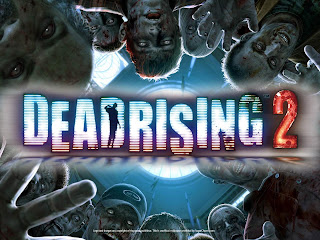
The factor that I hadn't considered when developing my worldview came to me today, as I had a friend show me the new sequel to the Dead Rising game for the Xbox: Zombies. Zombies are not alive, they are instead undead. This is to say that they were once alive, then were once dead, and then proceeded to become not dead anymore. To kill something that is alive is to violate its active pursuit to maintain a living status, but to rise from the dead is an active violation of the status of being dead, which naturally follows being alive. One could then say that the zombie is the antagonist, violating the natural order of things. Yeah, okay, but then why do I feel such revulsion at the scenes in Dead Rising 2, when certain individuals cut down bloody scores of zombie hoards with glee... for fun? There are, in fact, characters in this video game who have taken advantage of the zombie epidemic to create gameshows, the premise of which is to slaughter zombies in as many numbers as possible in the most creative (and rather sadistic) ways.

So I ask myself, is this an affront to the zombies? Well, they are not alive, thus the only result of their being "killed" is to stop their rebellion to, their overturning of, the natural order. Perhaps I feel some sort of revulsion because these forms were once alive, were once living individuals with personalities, contributions and relationships. In a way, wantonly cutting down their zombie forms for amusement is an insult to the lives they once lived, like the mutilation of a corpse. Okay, so that's understandable, I guess. But my reaction goes beyond feelings for the zombies. And I find myself remembering Emmanuel Kant's perspective on the issue of human responsibilities to animals.

Kant did not believe as I do, that animals and all life has intrinsic value simply because it exists and so humans have the obligation to revere it. No, Kant believed that animals had little value in themselves. He did believe, however, that Humans had a moral responsibility not to mistreat animals. This was because this moral obligation helps humans to develop their own morality, their own humanity. That is to say, a man should treat a dog well not because he values the life of the dog, but because a human should be above the mistreatment of an innocent animal. It was for our own sake. This is a logic that seems applicable to my zombie problem. I may not have any real sympathies for the zombies (especially when they grab onto you and go for the jugular) but don't think that they should be herded into an arena to be cut down by contestants with chainsaws simply because, well, humans should be beyond such base destruction. I have to side with Kant on this one and say that zombie-killing shouldn't be done for sport because such activities are a threat to our own humanity, the development of our own morality.

I honestly never thought I'd have to decide where I stand on this subject... but life's full of surprises I guess. Now, in the event there is ever a large-scale zombie outbreak, I'll have my priorities figured out.

Tuesday, September 28, 2010

Small thoughts on a big thing


"You are a child of the universe,

No less than the moon or the stars.

You have a right to be here,

And whether or not it is clear to you,

The universe is unfolding as it should.

Therefore, be at peace with God,

Whatever you perceive Him to be,

And through all your trials and tribulations,

Be at peace with your soul."


Any thoughts on this? Are we really an integral and instinsic part of the universe or do we impose ourselves upon it? Should we strive for such an existance? Should we entertain such a perception or are we deluding ourselves in doing so? What are the alternative approaches?


Thursday, August 19, 2010

Hello? Hellooooooo!!!! - or How Rude!

Is anybody out there? No? Well, okay then. Now I don't have to worry about posting anything interesting or sounding intelligent. Gosh, I probably don't even have to use grammar... Then again, the prospect of such freedom is scary, so I'll stick with the grammar for now (It'd be like running around the house in your underwear when no one else is home. It still feels wrong).
Which leads me to my thought of today: Cultural mores (pronounced "mor-ay") and folkways. I think it's funny that we come to believe that certain things are wrong and others are right, without ever questioning why. To be fair, many of the things your parents taught you as you were growing up are "right" and "wrong" for good reasons -most often to avoid conflict and show respect to others. Then again, if we never take the time to ask why we do or don't do things, why some things are and are not socially acceptable, we end up with manners and practices that really don't make sense (and perhaps are simply inconveniences).
The best examples of such pointless social rules are often realized when submerged in another culture. The clash of cultures and the misunderstandings that ensue often force one to contemplate why they ever did things in their way to begin with and why the alternative is (or really shouldn't be) acceptable. For example, I have an American friend who's living in Paris (a pretty culturally-compatible place for Americans). She once recounted for me an episode during which she dropped her passport on the metro and couldn't find where it had fallen. A passport is a pretty important thing to lose while in a foreign country, and her consequential distress at her inability to find it was understandable. She was getting panicky, after a few minutes and was down on her hands and knees looking, asking everyone near if they'd seen it. However, everyone on the subway was completely ignoring her, despite her constant "I've lost my passport!"
She initially thought that all these Parisians were simply cold, rude individuals, but upon telling her French friend of the incident, she learned that the people on the metro were trying to be polite. Had she said, "Can you help me find my passport?" any decent person on the train would have tried to help, but since she was only exclaiming how she had lost it, they did what they believed was the polite thing and completely ignored her. The reasoning behind this behavior was that they didn't want to embarrass this woman in her distress, and so they refused to acknowledge it. This response is a far cry from what many decent Americans would do, which would be to help the poor woman find her passport (hopefully), so she simply thought these strangers' refusal to even make eye contact with her was just rude.
And so at the risk of this question echoing as it bounces off of the empty walls of this blog... Can you think of any manners or customs that you've been taught that don't make much sense when you stop and think about them? Have you ever been confronted with a different way of doing things -whether in a different household or a different country- that has ever seemed wrong or made you question the way that you do things?